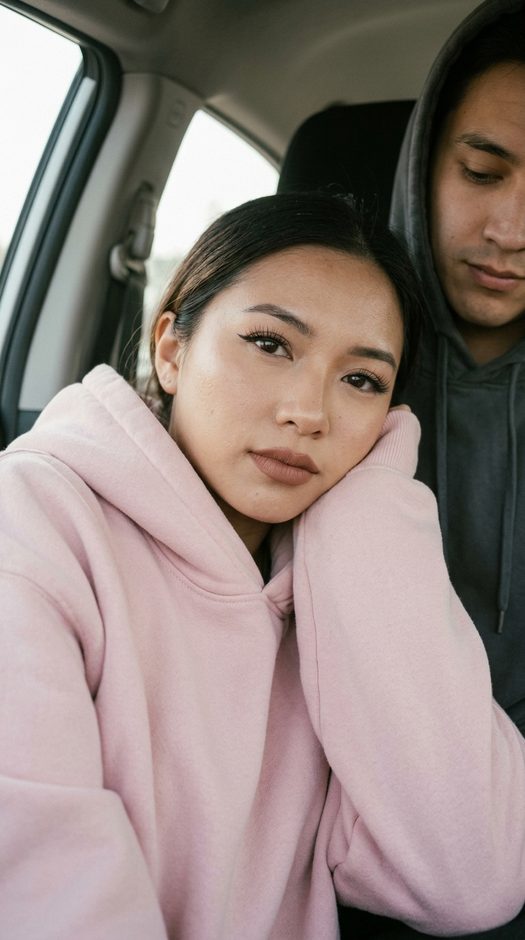
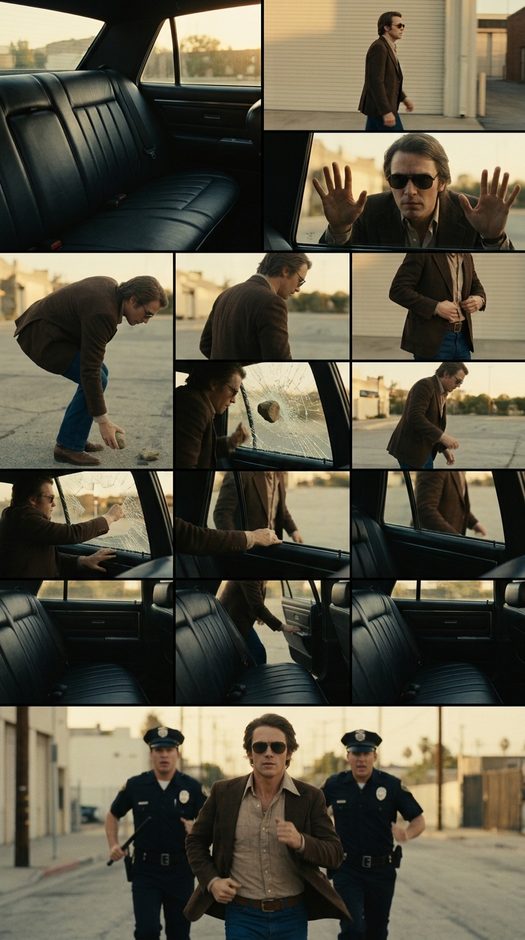
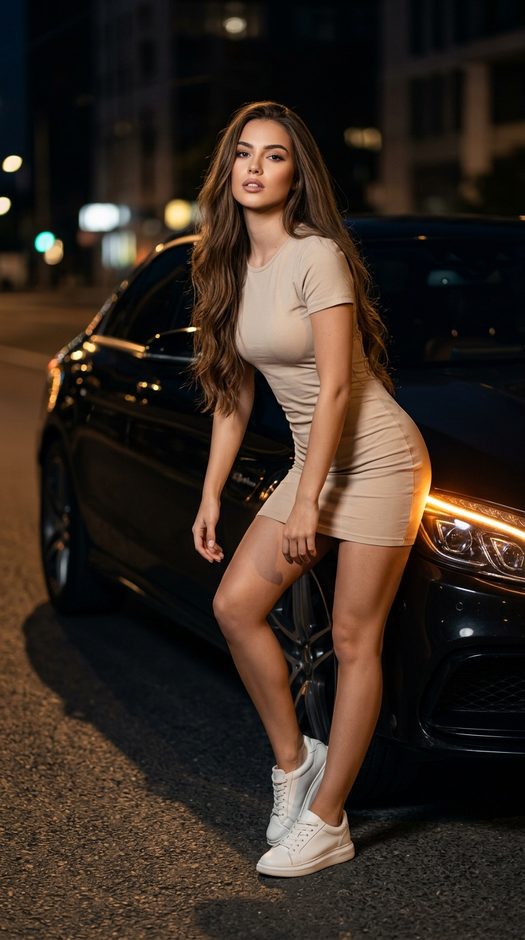
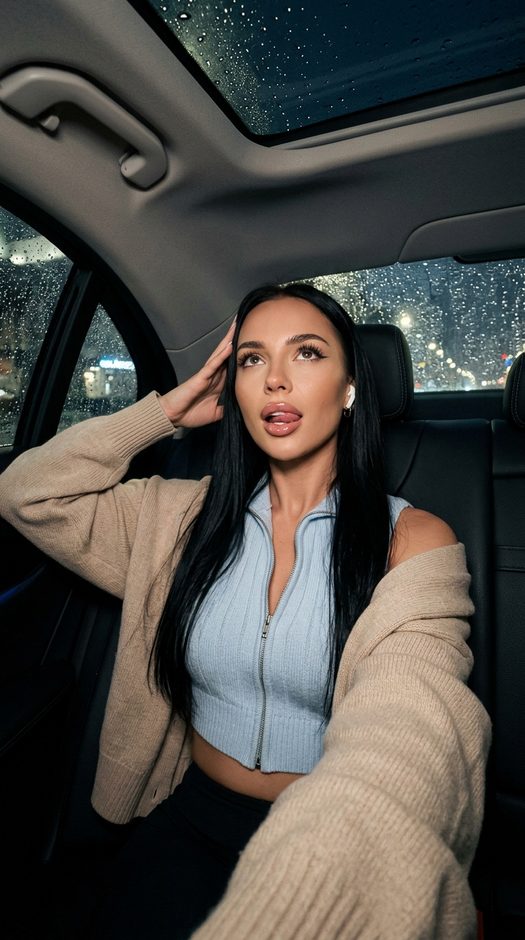
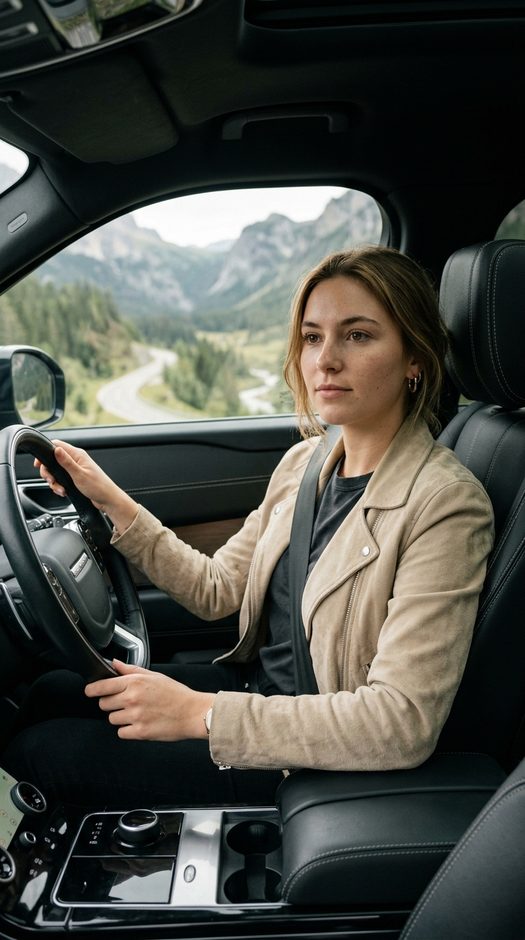
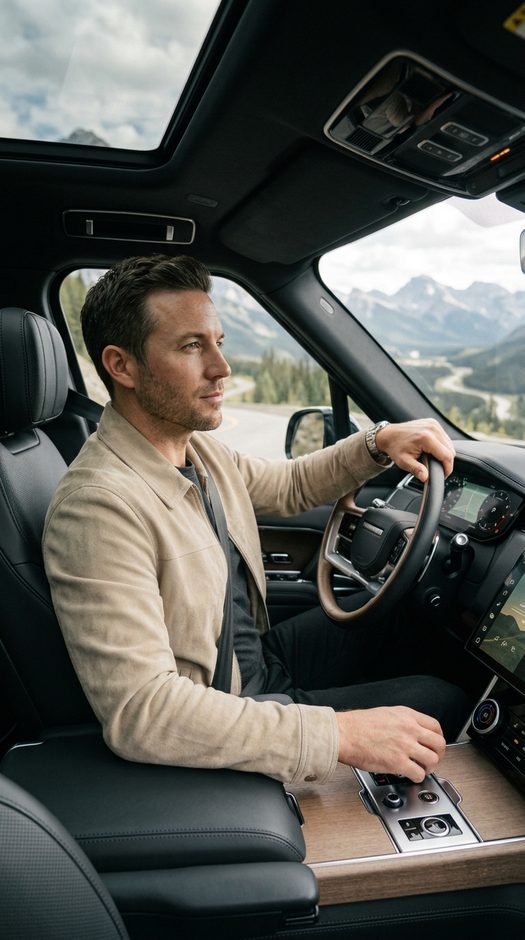
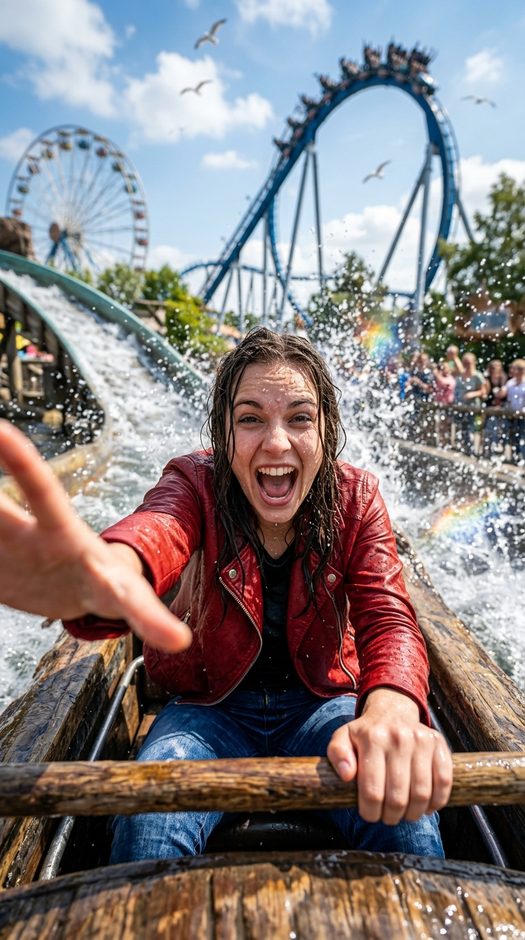
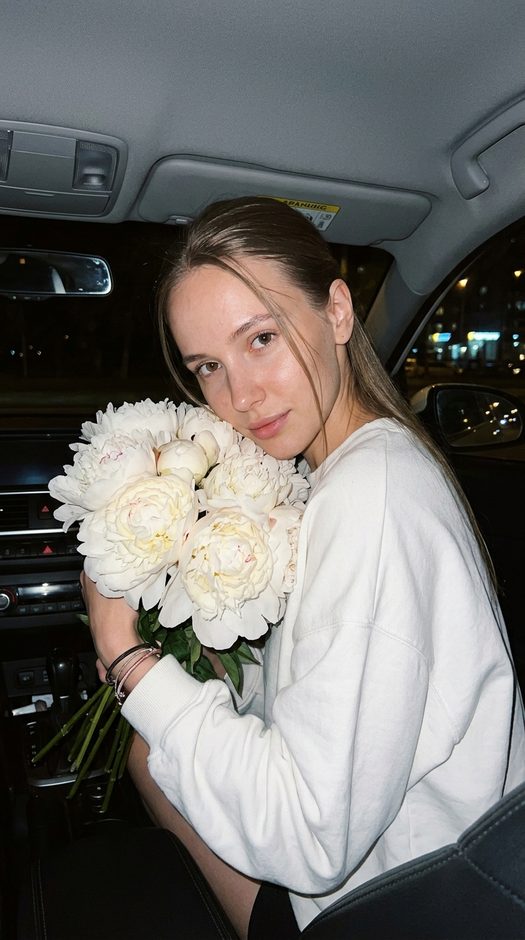
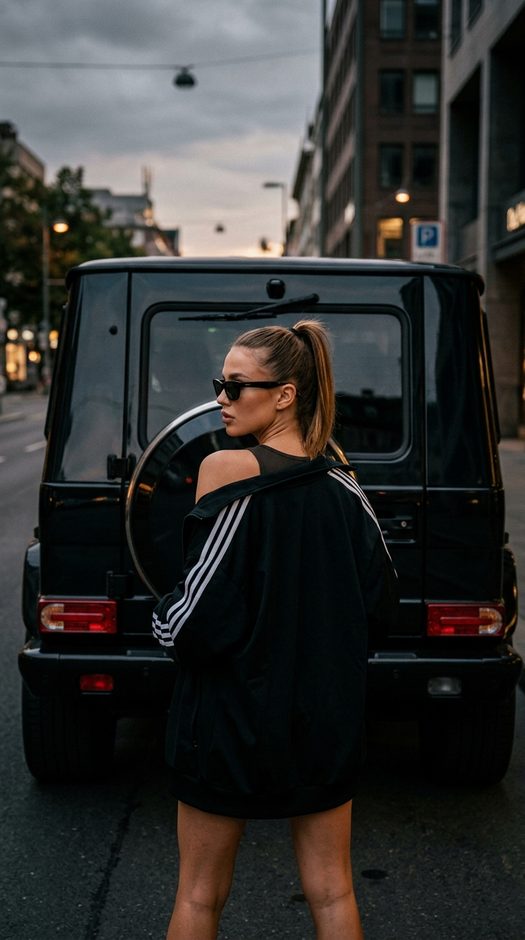
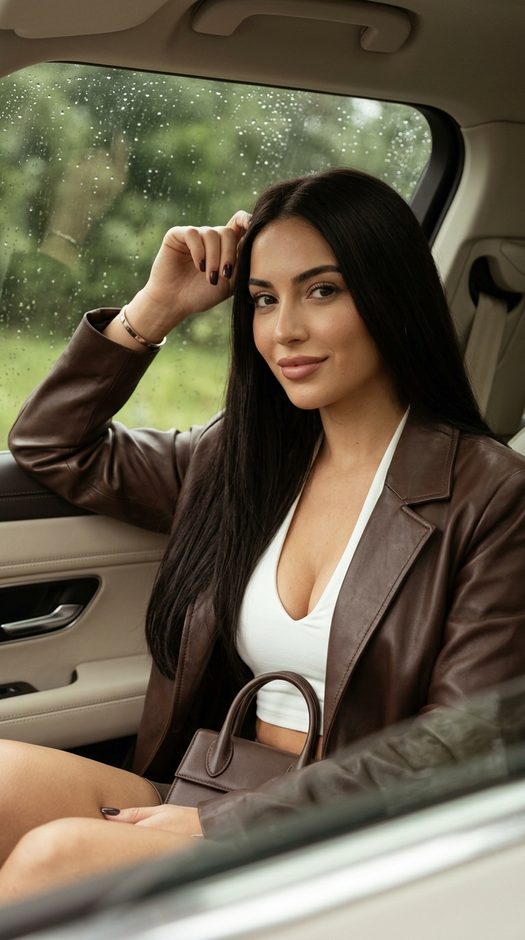
Concept: Create one 12-second extremely photorealistic cinematic film about a car theft followed by a police chase. @Image1 = preserve only the product identity: exact shape, proportions, colors, materials, packaging, branding, logo, typography, and all distinctive details. Ignore background, lighting, composition, and camera. Keep the same product at a believable scale throughout. @Image2 = preserve only the character and wardrobe identity: exact face, hair, skin, body, clothing, and accessories. Ignore background, lighting, and composition. Add one pair of dark thin-frame sunglasses; if suitable glasses already exist, keep them. Never create two pairs and never alter facial identity.
Setting: A premium dark sedan parked by a quiet American sidewalk, with a black leather rear seat. Late afternoon warm sunlight. Both shots must share the same visual treatment.
Visual Style: 35mm late-1960s to early-1970s cinema look, warm photochemical color, natural skin tones, restrained saturation, deep blacks, organic grain, subtle halation and bloom, vintage spherical depth, restrained depth of field, natural 24fps motion blur.
Shot 1: 0–8.8s, car theft.
Camera & Optics: Locked camera inside the car at passenger chest height, medium-wide framing around 35mm, looking across the rear seat toward one large closed side window.
Framing & Composition: The product is placed near the window, reachable after the glass is broken, with correct scale, weight, shadows, and reflections. Nothing should appear floating or composited.
Action & Pose: Human acting must stay restrained and natural. Thought before action, cause before effect. Eyes, then pause, head, then pause, body. Natural balance and inertia only, with no twitching, jerks, robotic transitions, or exaggerated comedy.
0–0.5s: Quiet locked frame, product on the seat, no character visible.
0.5–1.5s: The character walks from right to left outside the car, nearly passes, notices the product, and stops. Eyes react first, pause, head follows, pause, then one step backward to the right and settles.
1.5–3.0s: The character approaches. Both hands go onto the glass, face close to the window, chin down, both eyes converging on the actual product position. No glance toward the camera. One hand lifts the sunglasses slightly while the eyes remain locked on the product, then lowers the glasses while still staring at it.
3.0–4.0s: Half-step back, checks right, pause, then left. Makes one small adjustment using existing clothing only. Decision beat.
4.0–5.0s: Hands are empty. One hand becomes the stone hand, the opposite hand becomes the product hand. The character bends below the window, picks up one rough stone, then rises with the same stone clearly visible. The product hand remains empty.
5.0–5.7s: One compact strike. The stone must contact the intact glass first, fracture begins at the point of contact, and only then the tempered glass collapses into small fragments, mostly downward. No fist, hand, or arm breaks the glass.
5.7–6.1s: Recoil, then visibly drop or toss the stone downward outside. The stone action ends here. No random motion and no glass-clearing gesture.
6.1–7.7s: The product hand reaches through the broken window and the gaze returns to the product. First camera movement begins here: a slow real push-in. Micro slow motion sequence: approach, decelerate, almost touch, hold, first contact, fingers close, complete grip, micro-hold, then return to normal speed. Do not remove the product on first touch. Show tactile detail of skin, product, leather, and glass. Pull the product away with realistic material and weight response, while keeping its identity unchanged.
7.7–8.8s: Fast smooth pull-back. The product fully exits, the seat spot is empty, the character turns away and begins escape.
8.8s: Mandatory hard cut.
Shot 2: 8.8–12s, exterior police chase already in progress.
Camera & Optics: Front-facing medium tracking shot, camera moving backward at the same speed as the runner.
Framing & Composition: The same character runs forward toward the camera, large, centered, waist-up, holding the same visible product. Two uniformed American police officers run directly behind in the same frame, never in front and never between the camera and the character. One officer may carry a baton, the other may shout or reach.
Action & Pose: Natural running with restrained urgency. The character looks forward for most of the shot. Near the end, the eyes react first, then the head and a slight shoulder turn follow; while still running forward, the character looks back over one shoulder at the pursuing officers. The product remains visible and secure. End unresolved.
Priority Instructions: Stable character and product identity, exact product eyeline, visible stone pickup, visible stone contact, visible stone discard, signature grab timing, mandatory hard cut, final waist-up chase with two officers behind, realistic anatomy, realistic hands, realistic glass, realistic materials, no flicker, no robotic motion, no synthetic AI look.
Quality: 4K.